
BISP 8171 Payment Raised for 2026 as IMF Backs Budget Expansion
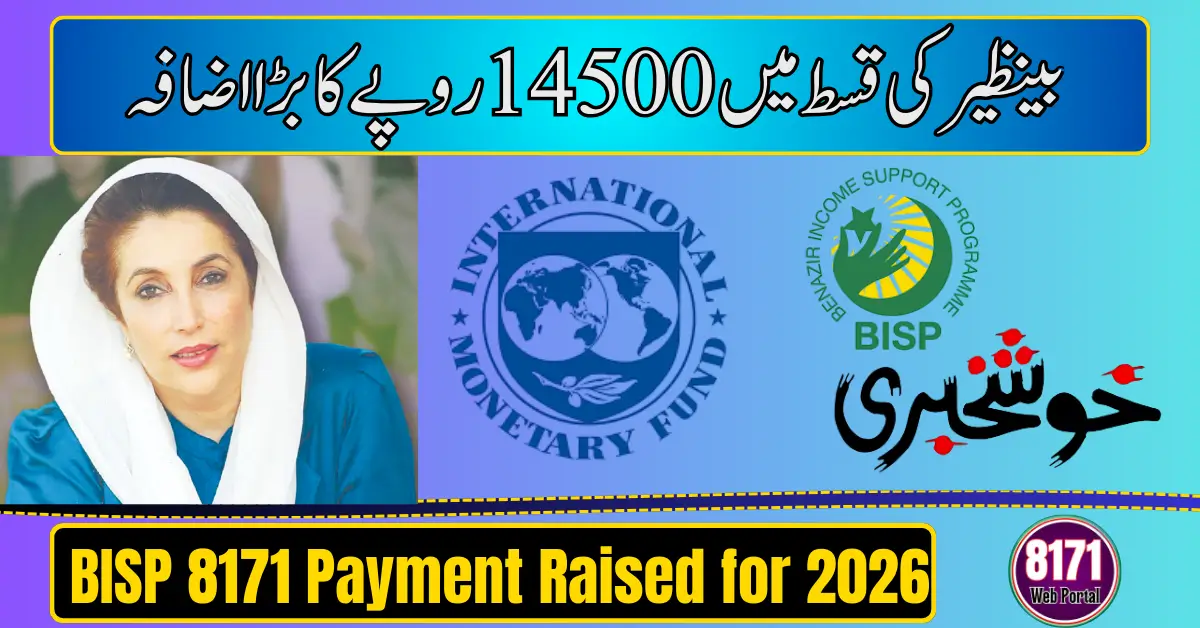
Pakistan’s flagship social welfare initiative, the Benazir Income Support Programme (BISP), is set to receive a major financial boost in 2026, with the IMF endorsing an increase in the BISP budget and cash assistance amount. The move is being seen as a key step toward strengthening social protection for low-income households amid persistent inflationary pressures.

How to Check Ramzan Package 2026 Eligibility – Complete Guide for 8070 Applicants
The Ramzan Package 2026 has been introduced to provide relief…

How to Check CNIC Status on 8070 for Ramzan Package Payment 2026 – Complete Guide
The 8070 SMS service has been introduced to help eligible…

Punjab Expands “Apni Chhat Apna Ghar” Scheme to Include Joint Families in 2026
LAHORE: The Punjab government has expanded the scope of its…
Why the IMF Supported the BISP Budget Increase
The International Monetary Fund has publicly acknowledged that Pakistan’s previous cash transfer levels were falling behind international social protection benchmarks. By approving a higher allocation for BISP, the IMF considers the program more aligned with global standards for poverty alleviation and income support.
According to policy discussions, the IMF emphasized that cash assistance must maintain its real purchasing power, especially in countries facing sustained inflation. The increase in BISP payments is intended to ensure that government support remains meaningful rather than symbolic.
Revised BISP 8171 Cash Support Amount
The enhanced payment structure under the Benazir Kafalat Program is summarized below:
| Support Type | Previous Amount | New Amount (2026) |
|---|---|---|
| Quarterly Cash Assistance | Rs. 13,500 | Rs. 14,500 |
This increase will be reflected in payments verified through the 8171 system, including checks via the web portal and SMS service.
Expansion of BISP Beneficiaries by 2026
Along with higher payments, the government plans to expand the program’s coverage. An estimated 200,000 additional households are expected to be enrolled, increasing the total number of beneficiary families to around 10.2 million by 2026.
This expansion will rely on updated data from the National Socio-Economic Registry (NSER) to ensure that only deserving households are included. Authorities have indicated that data cleaning and dynamic surveys will continue to prevent duplication and improve targeting.
Future Direction of the BISP Program
Looking ahead, several policy priorities have been highlighted in discussions with international partners:
- Inflation-linked reviews of cash assistance to protect beneficiaries from price shocks
- Strengthening conditional cash transfers, including education stipends and child nutrition programs
- Post-survey eligibility adjustments after upcoming nationwide household assessments
- Greater focus on transparency through digital verification using the 8171 platform
These measures aim to modernize BISP and make it more resilient in the long term.
What This Means for Beneficiaries
For families already enrolled in BISP, the increase means higher quarterly support starting in 2026, subject to CNIC verification and eligibility status. New applicants may also benefit as coverage widens, provided they meet poverty and documentation criteria.
Beneficiaries are advised to keep their CNIC records updated, respond to NSER surveys, and regularly check their status through official 8171 channels to avoid delays.
Conclusion
The BISP 8171 payment increase for 2026, backed by the IMF, signals a stronger commitment to social protection in Pakistan. With higher cash assistance, expanded coverage, and planned reforms, the Benazir Income Support Programme is positioned to play an even more critical role in supporting millions of households facing economic hardship in the coming years.
